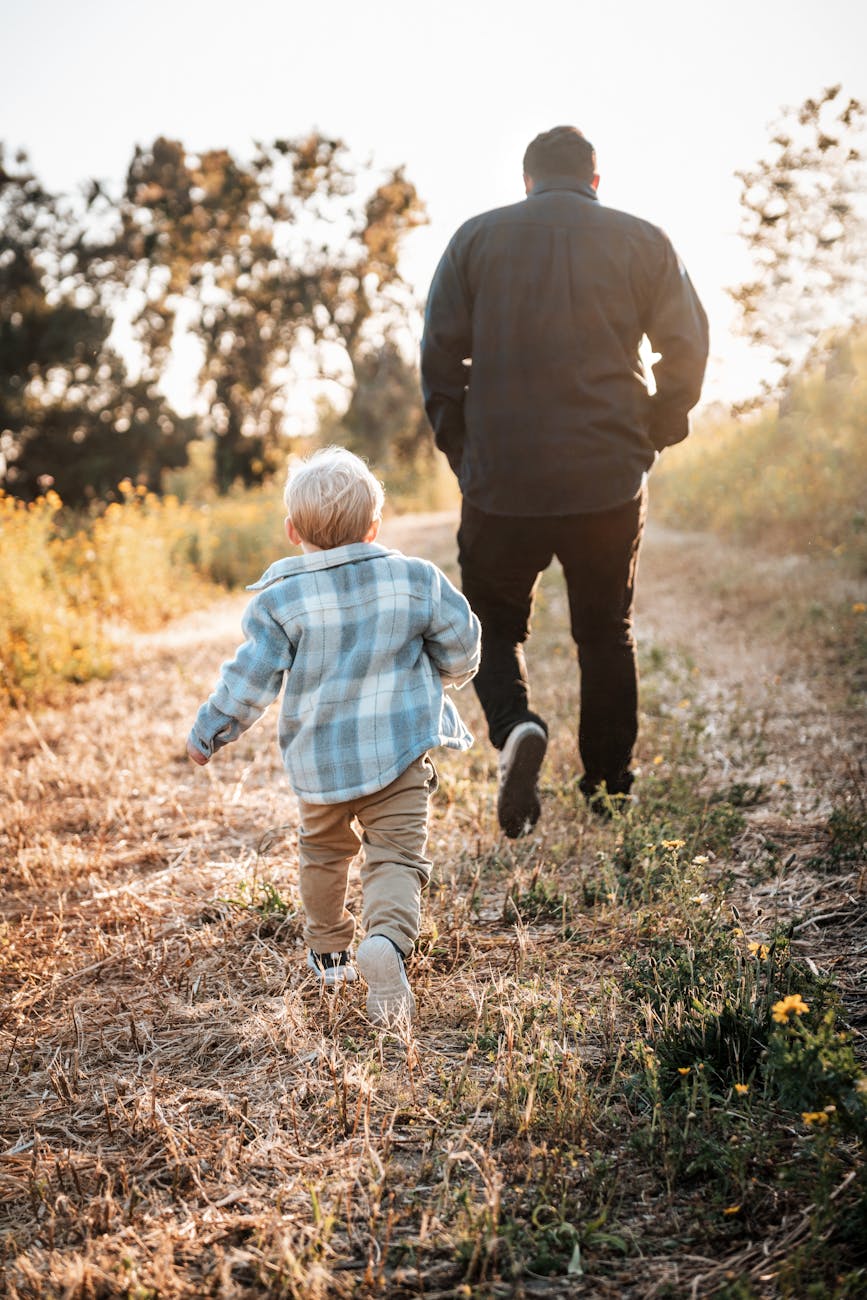
Becoming a dad is transformational. It changes everything. It gives a purpose, a new priority to life that had been previously absent. Fathers recall the moment when they became dad and the love and commitment made at that time to their child. Becoming a ‘separating’ dad also seemed to change everything in unexpected ways and threatened and risked every parenting relationship.
Recently a distraught father spoke to me about the emotional birth of his child. His eyes misted over as he talked about the infant’s serious health concerns and the oath/promise he made that first night to be at the child’s side, forever. He has kept his promise! He fears that like many separating dads he will be unable to navigate through the marital breakdown and keep his solemn commitment. He doesn’t understand a process that seems determined to reduce his parental role and tear away at the best of who he is.
A father from our community wrote the following words that capture what many separating dads “grudgingly accept” in order to restore calm to their children’s lives.
His words: “…it’s the days you wake up with the kids and put your kids to bed that count. Full days with dad. I love them, my kids love them. The rest become transition days, you are excited to see them on one end and depressed to see them off on the other, emotional baggage that unchecked can pollute your limited time together.” (a separated dad)
I became a father in my own unique way through the courageous decision of a young woman to place her child up for adoption. I vividly recall the social worker placing him in my arms. Ten minutes later, she returned to ask if my wife and I wanted to keep him. I still laugh at the question—she didn’t seem to understand that he became my son, through whatever, the moment she placed him in my arms.
I remember that the adoption process was a time of anxiety, scrutiny and fear. Would we make the list of approved parents? Power rested in the perspective of the social worker and her mandate to ensure the best interests of that child. It was a difficult process, but one that you necessarily endured. Pushing back against the intrusiveness and judgment was not a viable option. My son and later my daughter had not yet been placed in my arms.
Curiously, the birth of my youngest daughter had no such intrusiveness or scrutiny as she was placed in my arms by a caring nurse in the birthing room.
The next years, no one questioned whether I was a full parenting partner or quite frankly whether I was the best of parents or the worst of parents or somewhere in between. I was dad!
The common bond of separated fathers commences the moment that the intimate relationship breaks down. It brings with it in some ways the scrutiny of the social worker EXCEPT that the children are your children NOT the children of social workers or lawyers, judges or the Canadian Bar Association. A separation with lawyers too often is a process built for finding differences, not for ensuring that children have both parents and grandparents in their daily lives. A separation with children is a long crooked path that requires ongoing support to meet the challenges of change. An initial, adversarial process is the wrong path to long-term cooperation.
My boys’ dad is not an unpleasant obstacle; he’s an integral part of their lives.
Jennifer Fink: A Wisconsin mother of four boys
This insight comes from a Wisconsin mother who originally fought a determined battle in Court in an attempt to minimize any participation by the dad in her boys’ lives. The Wisconsin family court justice ‘insisted’ that Wisconsin’s presumption of shared parenting applied. The boys would have their father as an ‘integral’ part of their lives forever.
Think about Ms. Fink’s wonderful adjective ‘integral’ to describe the parenting relationship for each parent now. A definition for ‘integral’: necessary to the completeness of the whole. Imagine a community where ‘the completeness of the whole’ (our child) is the foundation for supporting separating/separated families in our community.
Canada’s Parliament rejected (2015) the Wisconsin’s presumption of shared parenting strategy intended to accomplish the ‘completeness of the whole’.
Shortly before starting our little agency (2005) I met a teenage boy age 14. His parents had separated several years earlier. The son had written a note to his parents for Mother’s Day/Father’s Day acknowledging and thanking them for ensuring that he had both of them in his life and as such an ‘almost normal upbringing’. In doing so he realized that through their cooperation he was able to learn who he was- an impossibility if either parent had faded away or vanished from his life. He recognized the gifts of character that were part of him-his mother’s sense of humour and joyfulness, his father’s gentleness and generosity.
These parents remembered the oath they made together to their son some 14 years earlier. They knew that both of them and their extended families were necessary to the completeness of their son. It remains an ongoing journey …for a lifetime.
Acknowledging and supporting each parent’s contribution to the child’s ‘completeness’ provides the opportunity for a family to build ‘integral’ parenting relationships that endure forever. It is my belief that our community has an obligation to develop strategies that best ensure the completeness of the whole. I have yet to hear any leader-legal, counselling, social worker or funder in our community give a public voice to such a mission. Silence is a strategy that effectively maintains a broken and destructive system.
A year ago at sunset I was on beach on the Gulf of Mexico with my 3 year old granddaughter. We were accompanied by probably 300 mothers, fathers and grandparents all quietly standing in awe of this shared, family experience. As the sun set everyone broke into applause as one. My father and gramps were with me in spirit, hand in hand, with the little one. They were an integral part of the completeness of my whole and thus of my children and grandchildren.
It was a spiritual connection of three generations at that moment and a connection that must be cherished and nurtured by all.
My heart goes out to those of you facing the pain of interrupted parenting or worse. I faced such with each of my children at different times in the early years of the separation. That I am an integral part of each of their lives (and now six grandchildren) was more than uncertain at one time. You must find the supports to survive the despair and to find your way to a calmer place. I always believed (hoped) that the relationship that I had with each child during the intact years would sustain our relationship through the dark times…and in the end it did.
A child changes each man’s identity forever. In the past decade I have been so fortunate to have met so many courageous, creative, unique, gentle, compassionate, caring, generous, resilient and involved fathers, mothers, stepmothers and grandparents. I am a better person for knowing you. More importantly your gifts of character to your children – already given-are part of your child’s growth on their journey to ‘completeness of the whole’-with more still to come. Each of us must be prepared for new opportunities. They can occur at the most unpredictable of times.
Kyle Lowry perhaps captured best the gift of fatherhood in a Toronto Sun interview:
But …fatherhood that changed everything. He’s done more for me than I’ve done for him… He’s a bigger influence on my life. It made me more of a man. It made me more of a grown-up. It made me more mature. It made me understand that life is bigger than just basketball…
Please take care.
 Kids 'n' Dad
You must be logged in to post a comment.